
Translation ≠ Japan-Ready: Building Websites for the Japanese Market
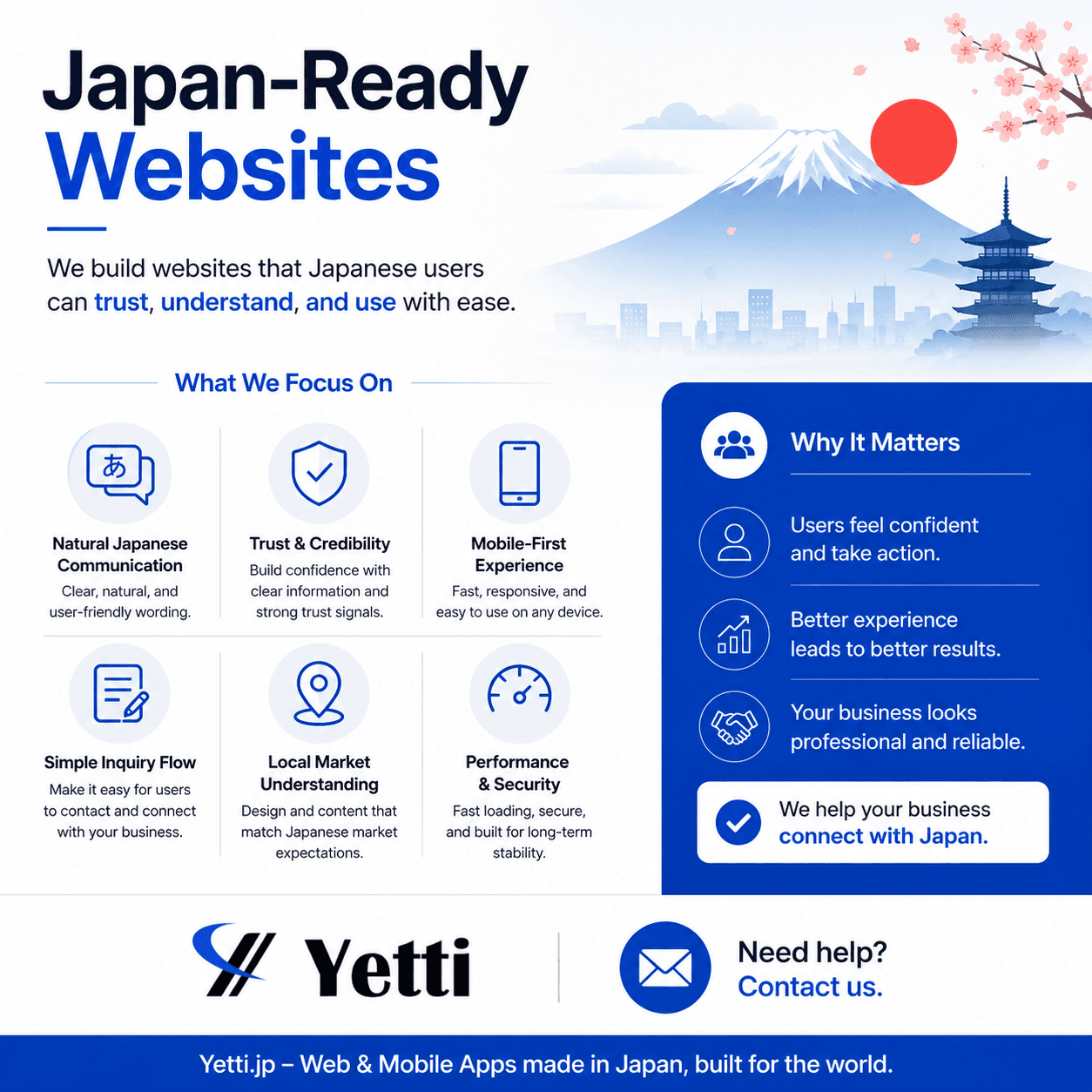
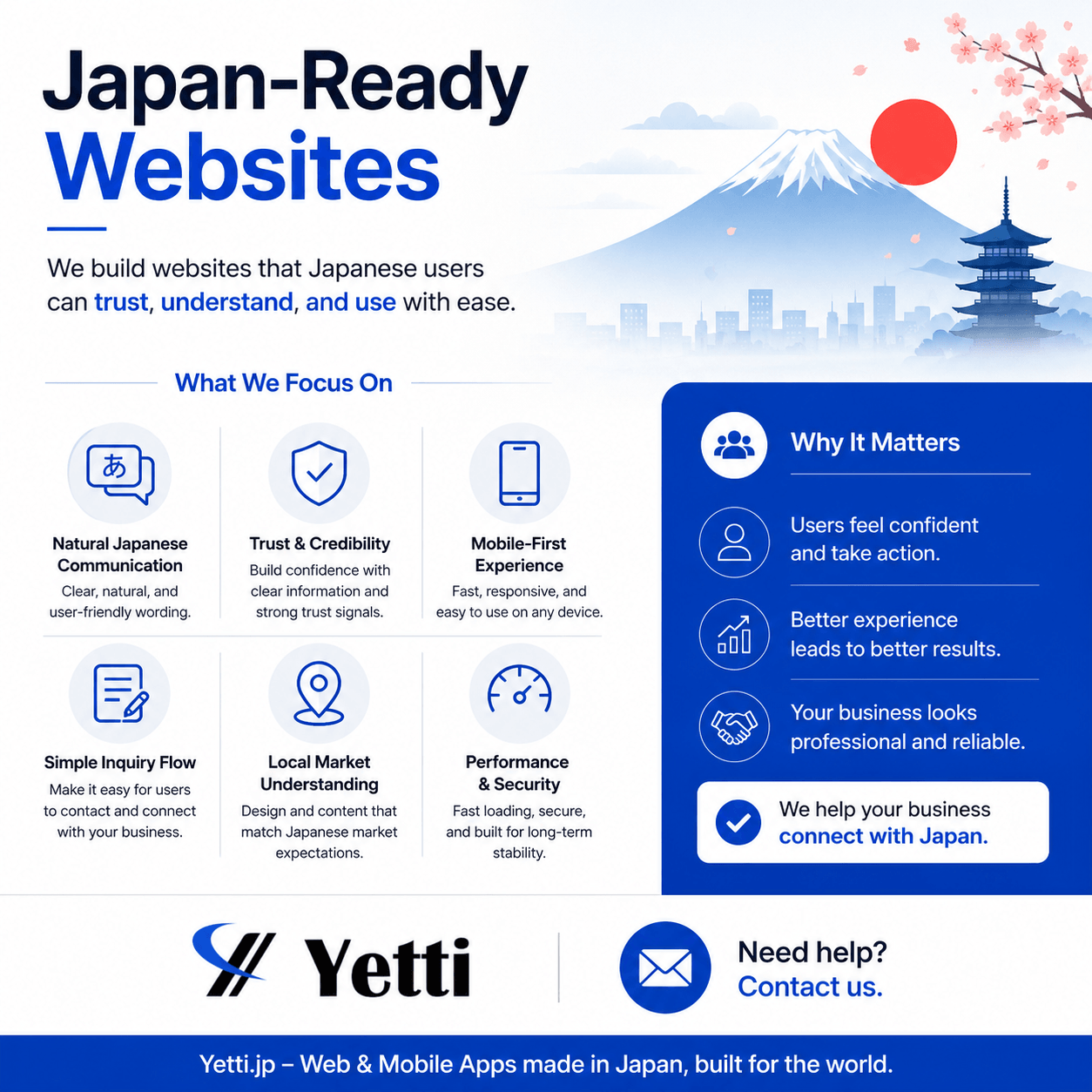
A website for users in Japan needs far more than just translated text.
Even if the words are linguistically correct, visitors may still feel uncertain or drop off quickly if the site lacks the structural and cultural trust signals expected in the local market.
Why Simple Translation Falls Short
When entering the Japanese market, companies often make the mistake of using direct translation (or machine translation) without adapting the user experience. This often leads to several common issues:
- Unnatural Wording: Literal translations sound awkward, machine-like, or overly casual, failing to convey professional reliability.
- Weak Trust Signals: Japanese consumers expect detailed company profiles, security assurances, and clear corporate registration.
- Confusing Inquiry Flow: Contact forms that aren't optimized for Japanese address formats or name inputs create immediate friction.
- Poor Mobile Experience: Japan is a mobile-first society. Layouts that don't scale perfectly or load quickly on mobile devices lose users instantly.
- Mismatched Visual Design: Design styles that work in the West might feel too sparse, too cluttered, or misaligned with local aesthetic expectations.
What Makes a Website Truly "Japan-Ready"?
Creating a high-converting website for the Japanese audience requires a holistic approach to localization, design, and development:
Natural Communication
Using professional, localized copy that fits the target audience—whether it's B2B corporate language (Keigo) or consumer-friendly terms.Mobile-First Structure
Ensuring lightning-fast, beautifully responsive layouts optimized for local mobile browsing behaviors.Clear Company Information
Presenting transparent corporate information, which serves as a major trust indicator in Japanese business culture.Frictionless Contact Flow
Designing simple, intuitive contact forms with clear fields and validation designed around Japanese user input habits.Local Market Context
Understanding local user expectations, payment methods, customer support standards, and design trends.
Build for Success in Japan
At Yetti, we help international businesses build, optimize, and maintain Japan-ready websites. Combining premium engineering practices with local market understanding, we ensure your digital presence is simple, correct, and trusted.
If you are planning to localize or build a website for the Japanese market, we can help review your strategy and support your development.
Yetti.jp – Web & Mobile Apps made in Japan, built for the world.
Ready to build your next product?
Let's discuss how we can help bring your vision to life.